Experian Fraud Alerts
Redesigning how people view, add, renew, and remove fraud alerts on their Experian credit report, with a clearer flow that helps more people protect their identity.
see experian fraud alerts live ↗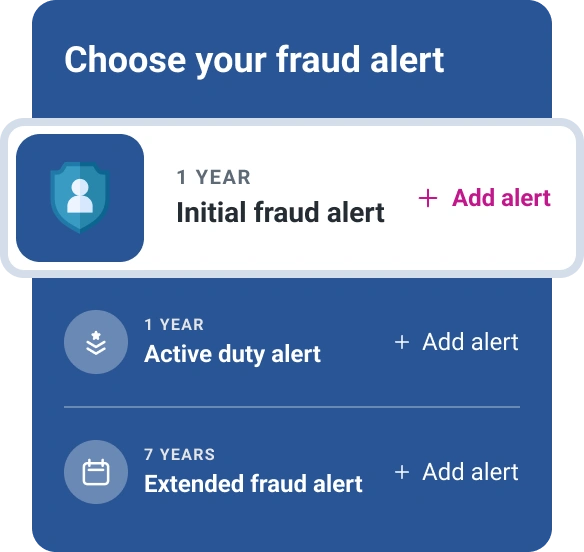
Overview
A fraud alert places a notice on a credit file that tells lenders to take extra steps to verify a person's identity before approving new credit. It helps protect people from identity theft, and there are three types:
- Initial alert, for people who suspect their personal info may be exposed. It lasts one year.
- Active duty alert, for people on active military duty. It also lasts one year.
- Extended alert, which requires an identity theft report and protects victims for seven years.
Alerts stay on the credit file until they expire or the person removes them, and they can be renewed online three months before expiring. This project moved the legacy Experian fraud alerts experience into the new consumer experience, where people can view, add, update, renew, and remove alerts on web, mobile web, and inside the native apps. The launch targeted roughly 217,000 new members with fraud alert intent each year across membership tiers. It shipped in phases from November to December 2024.
The Problem
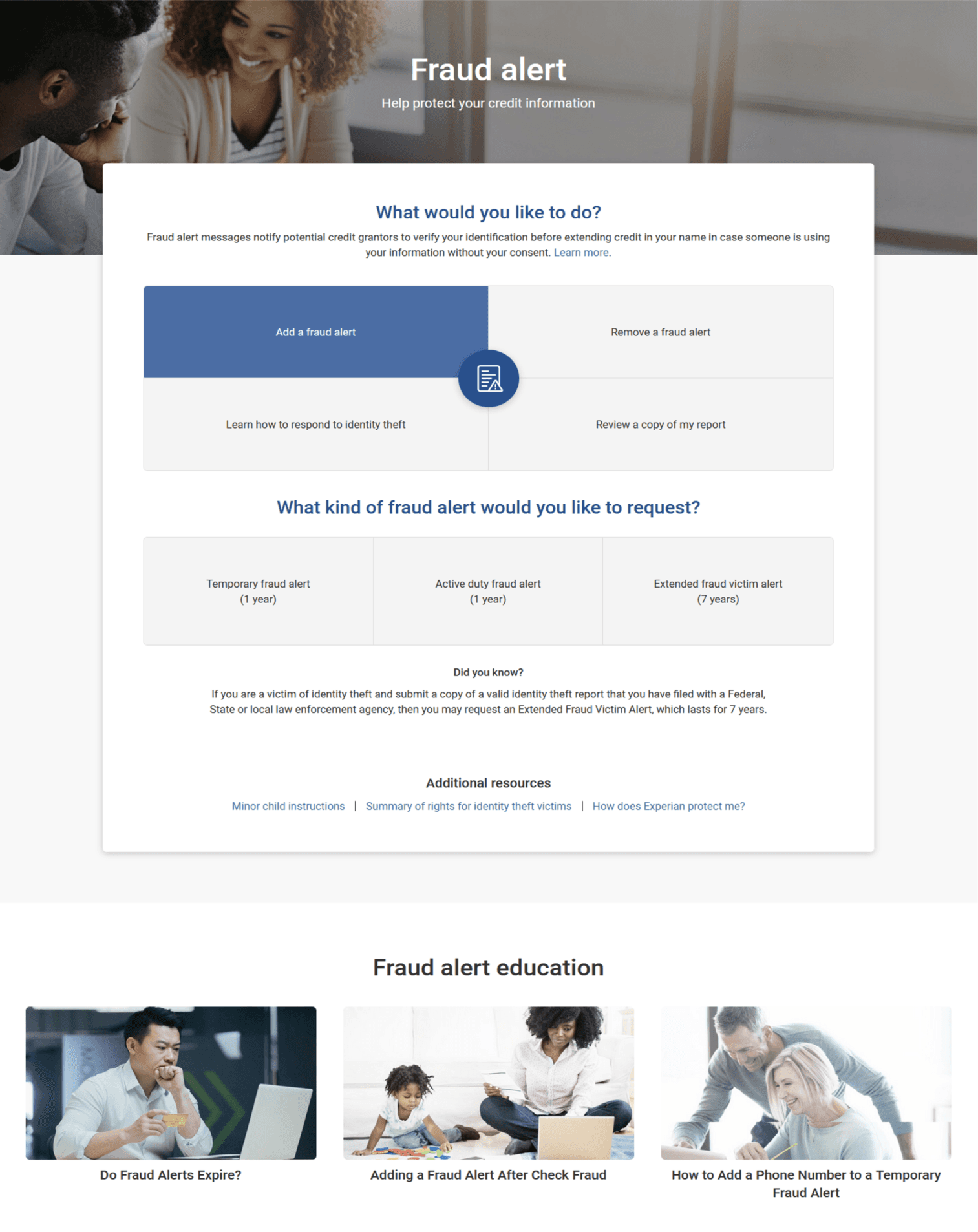
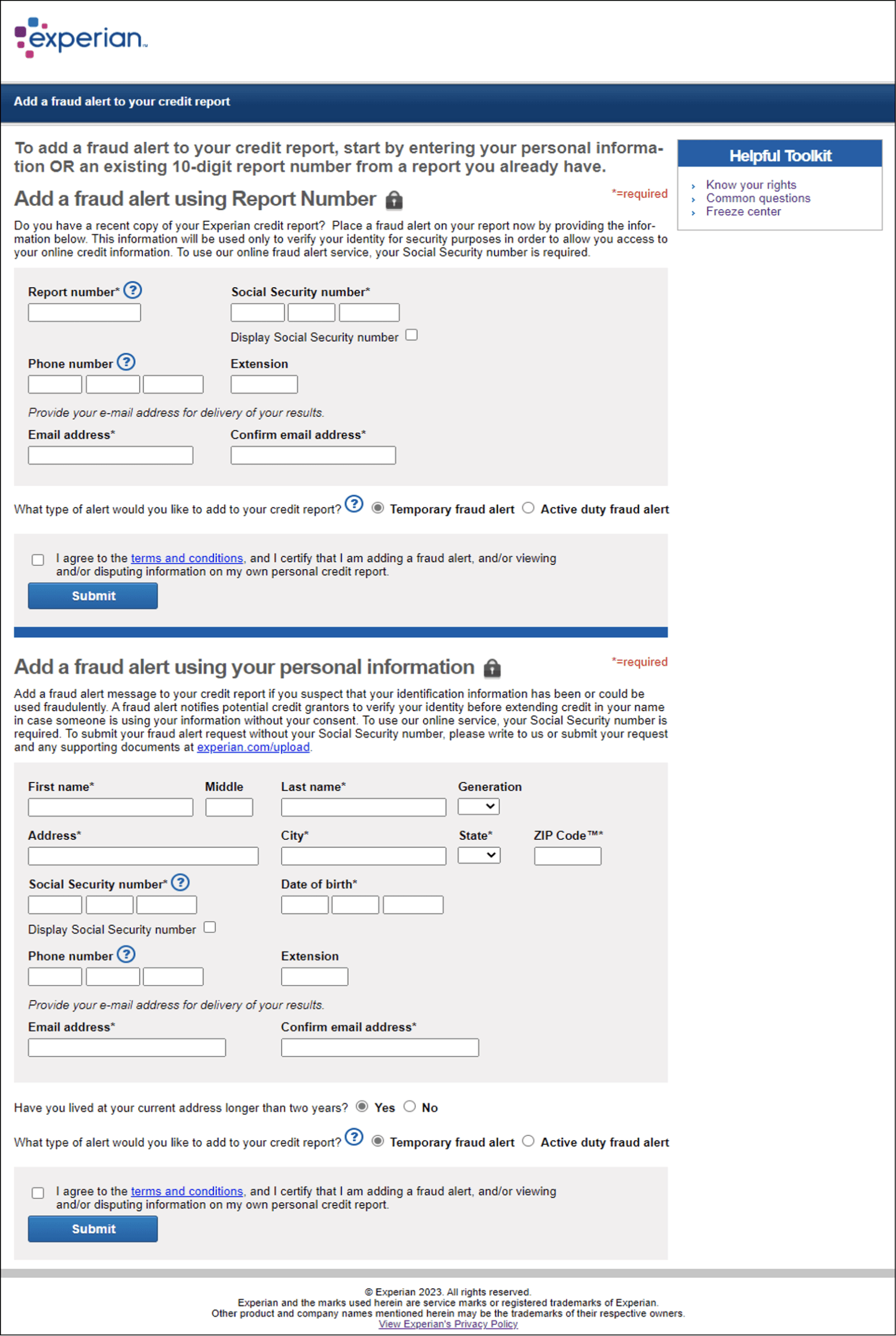
The legacy experience lived in an older system, separate from Experian's newer consumer experience. People who already feel stressed about identity theft needed a clearer way to see and manage their alerts.
- The legacy enrollment and management flow needed to be clearer and easier to complete.
- Fraud alerts sat apart from the other regulatory tools, the dispute center and the security freeze center, so people had no single place to protect their credit.
- The legacy site had no mobile-friendly breakpoint, so people on phones got a shrunken desktop page that was hard to read and fill out.
- The flow had to meet legal and compliance requirements, including alerts that are shared across all three credit bureaus and extended alerts that require proof of identity theft.
Process
This was a long, cross-functional effort. I partnered with legal and compliance to keep the flow aligned with updated regulatory requirements, and with engineering to build it as an independent micro frontend that could ship and change on its own schedule. Regulatory product partners, and copy partners reviewed the experience along the way.
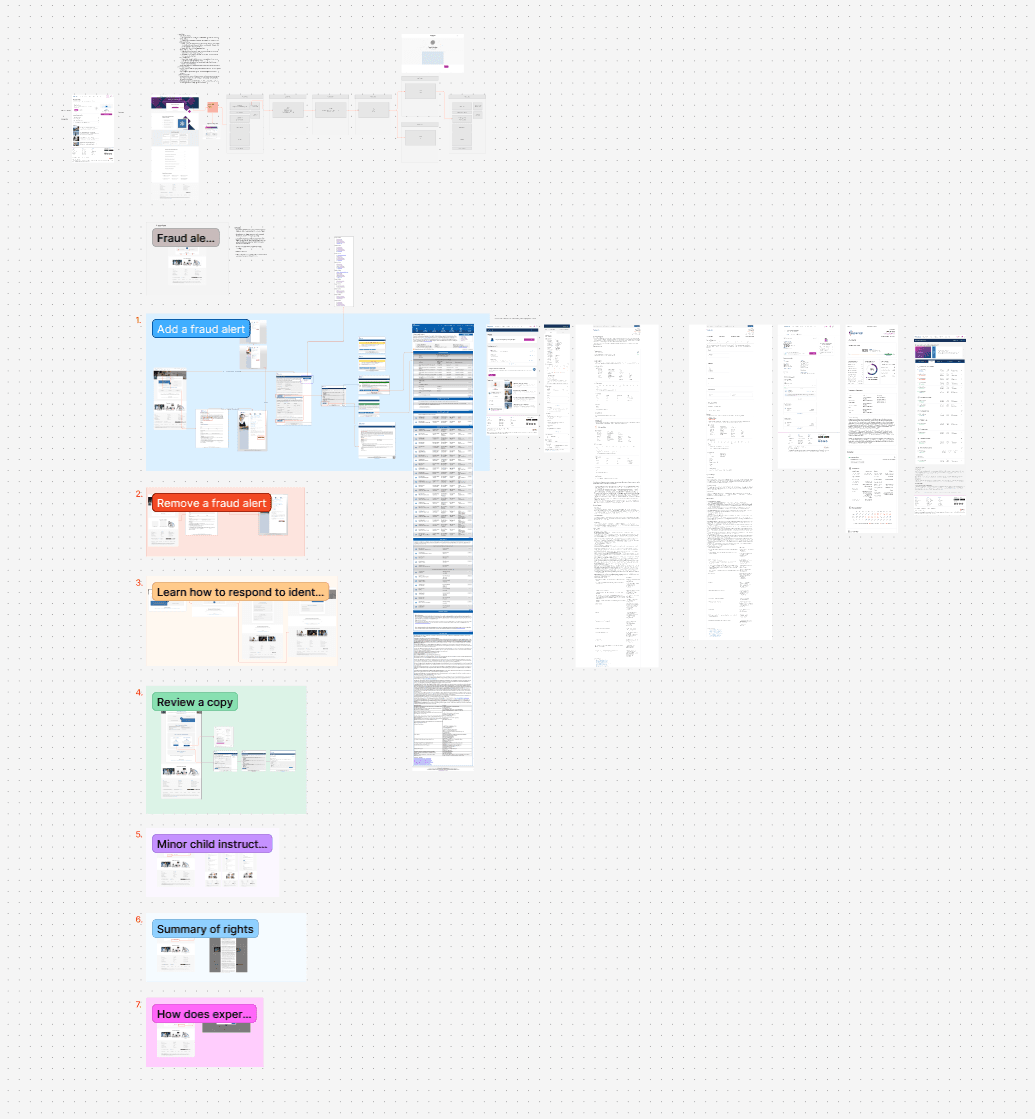
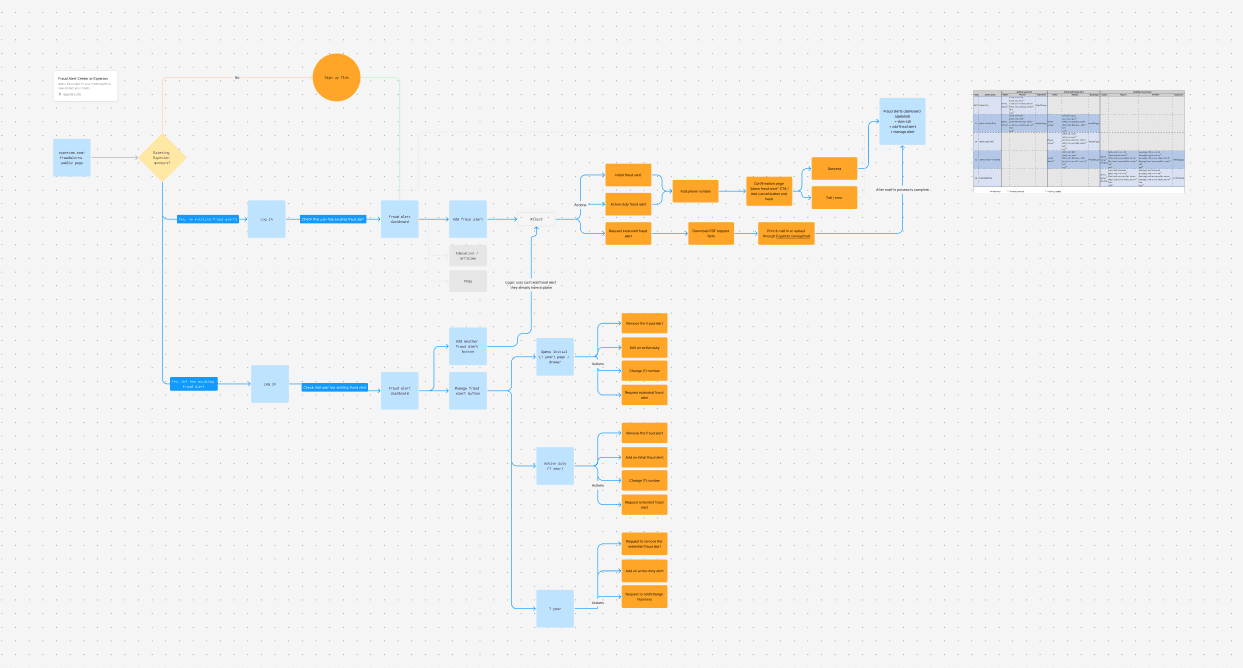
Wireflows, feature mapping, requirements gathering
Solution & Design
I redesigned the enrollment and management flow around one goal: make it clear what a fraud alert does and what happens next. People can now see their existing alerts and manage them from one place, on web, mobile web, and inside the native apps.
- Simplified the interface so each step asks for one thing, which cuts the confusion that sent people to support.
- Pre-filled personal information from the signed-in Experian account, so people no longer re-enter their phone number, Social Security number, and address. This cut the number of steps and the time it takes to place an alert.
- Added contextual education so people understand the type of alert they are choosing before they commit.
- Covered every alert type and action: view existing alerts, add an initial or active duty alert, request an extended alert, update phone numbers, renew within 90 days of expiration, and remove an alert.
- Brought fraud alerts into the same place as the dispute and security freeze tools, so protection feels like one connected experience.
- Worked closely with legal & compliance and a copywriter from the start, so the language and flow were compliant and adhered to Experian's voice and tone.
Screens
Before

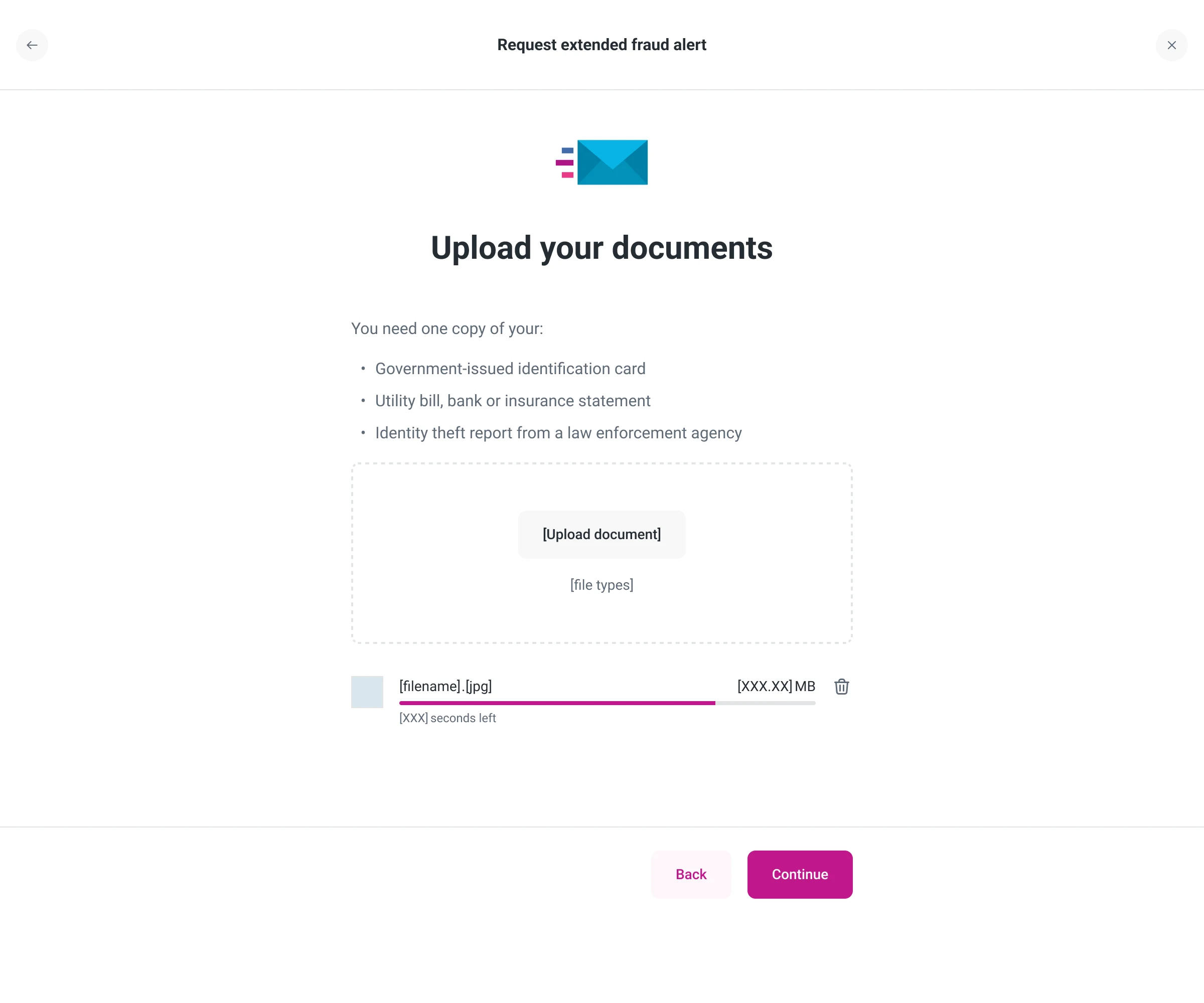
After

Impact & Outcome
Fraud alerts moved off the legacy system and into Experian's newer consumer experience. For the first time, all of Experian's regulatory services live in one place: the Dispute Center, the Security Freeze Center, and now the Fraud Alerts Center.
People can now manage their alerts on web, mobile web, and inside the iOS and Android apps. They can:
- View their existing Experian fraud alerts, no matter which Experian channel they were placed through
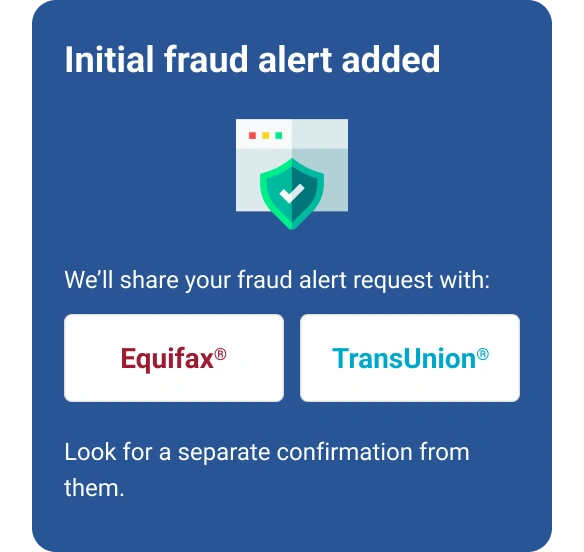
- Add an initial fraud alert, which Experian shares with Equifax and TransUnion so they add it too
- Add an active duty alert, which is also shared with Equifax and TransUnion
- Request an extended fraud alert, which is shared with the other two bureaus once Experian reviews the proof of identity theft and approves it
- Update the phone numbers on any existing alert
- Renew any alert within 90 days of it expiring
- Remove any alert
The redesign shipped in phases to limit risk, starting with existing web and mobile web users in November 2024, then new users and the native apps in December 2024. Each phase ramped up gradually, from 1% of traffic to everyone.
What's Next
Requesting an extended alert requires proof of identity theft. The next phase brings document upload into that request, so people can finish the whole process in one place.